
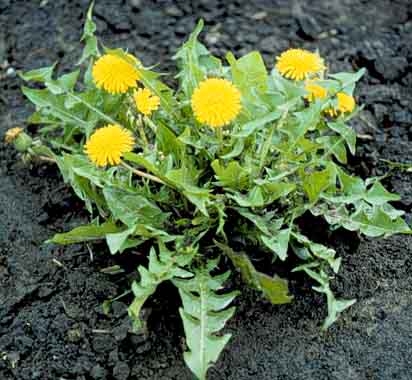
DANDELION Taraxacum officinale
Description: Long tap root
produces a white milky sap. Yellow flower head made up of 200 or more bisexual
florets on a hollow stem rises from centre of rosette of ‘Lion’s tooth’ leaves.
Hairless shiny leaves, the margin of which have large jagged edges resembling teeth,
each of which are cut into smaller teeth.
One of the first plants to bloom in the Spring, at least
ninety three types of insect frequent the Dandelion as each floret contains a
copious supply of nectar which more than half fills it. It’s early blooming and
quantity of nectar makes it of particular importance to Bees.
Habitat: Native of Western Europe. Grows in meadows,
fields and fallow land. Thought to originate in Central Asia but now grows
almost anywhere in the world, preferring moist conditions.
Common names:
Dandelion, piss-the-bed, pee-the-bed, lion's tooth, fairy clock, what
o’clock, blowball, cankerwort, priest's crown, puffball, swine snout, white
endive, wild endive, heart fever grass.
Its most familiar name of Dandelion is a corruption of the
French Dent de Lion (Teeth of the Lion). Similar names are found in
nearly all European languages and in its former specific Latin name Dens
leonis.
Once blooming is finished, the green sheathing bracts again
enclose the florets returning it the appearance it had in bud. This bud is
rather like the snout of a pig, hence its name in some districts 'Swine's
Snout.'
Th popular Middle Ages name for the plant of “Priest’s
Crown” arises from the seed disc when all the seeds have flown. The disc
remains bare, white and surrounded by the drooping remains of the sheathing
bracts resembling a priest’s shorn head. “Piss in the bed” is a Tudor name,
arising from the Dandelion’s medicinal ability to increase the flow of urine.
Traditional medicinal uses : (Herbs
and plants should never be used for medicinal purposes without first consulting
a qualified herbalist and Doctor).
Dandelion is mentioned in Chinese herbals in the 7th
century, and in Europe from the 13th Century. It was used by the
Arabian physicians of the 10th and 11th centuries.
Dandelion leaf is a natural sources of potassium and was
used as a diuretic remedy for water retention. Dandelion root has been used to
treat liver, kidney and gall bladder complaints as well as jaundice, stomach
disorders and skin inflammations. The root has also been used as a
laxative and to treat rheumatism and the white sap from the root was applied to
warts.
Additional comments: Small
birds enjoy the seeds of the Dandelion and pigs eat the whole plant although
sheep and cattle will avoid it. Young Dandelion leaves are often eaten in
salads and sandwiches or as a vegetable similar to spinach. The leaves are used
to make Dandelion Beer and the flowers Dandelion Wine. The roasted roots are
used to make Dandelion Coffee.
Folklore, Myths and Fables:
If you can blow all the seeds off a Dandelion seed head with one blow, you are deeply
loved. If some seeds remain after one blow, then your lover is not fully
committed to you.
If a lot of the seeds
still remain, you are not loved at all. Folklore also holds that the number of
breaths it takes to blow off all the seeds of a dandelion globe is the hour of
the day. Unmarried people can tell how long before they will marry by the
number of breaths it takes to blow off all the seeds.
It is hung around windows on St John’s Eve (23rd
June) to ward off witches.
"Are you separated from the object of your love?
Carefully pluck one of the feathery heads; charge each of the little feathers
composing it with a tender thought; turn towards the spot where the loved one
dwells; blow, and the seed-ball will convey your message faithfully. Do you
wish to know if that dear one is thinking of you? blow again; and if there be
left upon the stalk a single aigrette, it is a proof you are not forgotten.
Similarly, the dandelion is consulted as to whether the lover lives east, west,
north, or south, and whether he is coming or not." Source: "The
Child and Childhood in Folk-Thought," by Alexander F. Chamberlain
"The dandelion is an excellent barometer, one of the
commonest and most reliable. It is when the blooms have seeded and are in the
fluffy, feathery condition that its weather prophet facilities come to the
fore. In fine weather the ball extends to the full, but when rain approaches,
it shuts like an umbrella. If the weather is inclined to be showery it keeps
shut all the time, only opening when the danger from the wet is past."
Source: "Camping For Boys," by H.W. Gibson
DANDELION Taraxacum officinale
Description: Long tap root produces a white milky sap. Yellow flower head made up of 200 or more bisexual florets on a hollow stem rises from centre of rosette of ‘Lion’s tooth’ leaves. Hairless shiny leaves, the margin of which have large jagged edges resembling teeth, each of which are cut into smaller teeth.
One of the first plants to bloom in the Spring, at least ninety three types of insect frequent the Dandelion as each floret contains a copious supply of nectar which more than half fills it. It’s early blooming and quantity of nectar makes it of particular importance to Bees.
Habitat: Native of Western Europe. Grows in meadows, fields and fallow land. Thought to originate in Central Asia but now grows almost anywhere in the world, preferring moist conditions.
Common names: Dandelion, piss-the-bed, pee-the-bed, lion's tooth, fairy clock, what o’clock, blowball, cankerwort, priest's crown, puffball, swine snout, white endive, wild endive, heart fever grass.
Its most familiar name of Dandelion is a corruption of the French Dent de Lion (Teeth of the Lion). Similar names are found in nearly all European languages and in its former specific Latin name Dens leonis.
Once blooming is finished, the green sheathing bracts again enclose the florets returning it the appearance it had in bud. This bud is rather like the snout of a pig, hence its name in some districts 'Swine's Snout.'
Th popular Middle Ages name for the plant of “Priest’s Crown” arises from the seed disc when all the seeds have flown. The disc remains bare, white and surrounded by the drooping remains of the sheathing bracts resembling a priest’s shorn head. “Piss in the bed” is a Tudor name, arising from the Dandelion’s medicinal ability to increase the flow of urine.
Traditional medicinal uses : (Herbs and plants should never be used for medicinal purposes without first consulting a qualified herbalist and Doctor).
Dandelion is mentioned in Chinese herbals in the 7th century, and in Europe from the 13th Century. It was used by the Arabian physicians of the 10th and 11th centuries.
Dandelion leaf is a natural sources of potassium and was used as a diuretic remedy for water retention. Dandelion root has been used to treat liver, kidney and gall bladder complaints as well as jaundice, stomach disorders and skin inflammations. The root has also been used as a laxative and to treat rheumatism and the white sap from the root was applied to warts.
Additional comments: Small birds enjoy the seeds of the Dandelion and pigs eat the whole plant although sheep and cattle will avoid it. Young Dandelion leaves are often eaten in salads and sandwiches or as a vegetable similar to spinach. The leaves are used to make Dandelion Beer and the flowers Dandelion Wine. The roasted roots are used to make Dandelion Coffee.
Folklore, Myths and Fables: If you can blow all the seeds off a Dandelion seed head with one blow, you are deeply loved. If some seeds remain after one blow, then your lover is not fully committed to you. If a lot of the seeds still remain, you are not loved at all. Folklore also holds that the number of breaths it takes to blow off all the seeds of a dandelion globe is the hour of the day. Unmarried people can tell how long before they will marry by the number of breaths it takes to blow off all the seeds.
It is hung around windows on St John’s Eve (23rd June) to ward off witches.
"Are you separated from the object of your love? Carefully pluck one of the feathery heads; charge each of the little feathers composing it with a tender thought; turn towards the spot where the loved one dwells; blow, and the seed-ball will convey your message faithfully. Do you wish to know if that dear one is thinking of you? blow again; and if there be left upon the stalk a single aigrette, it is a proof you are not forgotten. Similarly, the dandelion is consulted as to whether the lover lives east, west, north, or south, and whether he is coming or not." Source: "The Child and Childhood in Folk-Thought," by Alexander F. Chamberlain
"The dandelion is an excellent barometer, one of the commonest and most reliable. It is when the blooms have seeded and are in the fluffy, feathery condition that its weather prophet facilities come to the fore. In fine weather the ball extends to the full, but when rain approaches, it shuts like an umbrella. If the weather is inclined to be showery it keeps shut all the time, only opening when the danger from the wet is past." Source: "Camping For Boys," by H.W. Gibson
