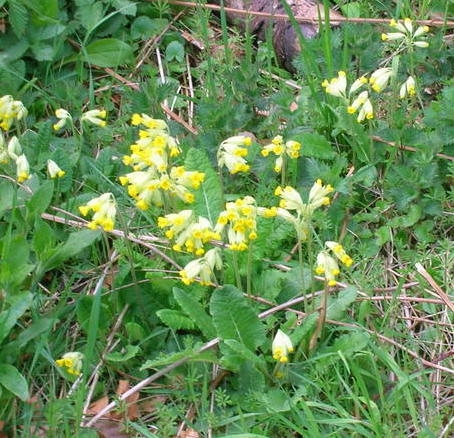
Cowslip (Primula veris)
Description: Evergreen or semi-evergreen, it grows to 8 to 10 inches tall (20 – 25 cms) with flat wrinkled leaves and small deep yellow cup shaped flowers in clusters at the top of the stem. Cowslip flowers from April to early June. Food plant of the Duke of Burgundy Fritillary butterfly and Plain Clary and Northern Rustic moths. A member of the Primrose family, its name derives from "cowpat"(Old English "cuslyppe") from where Cowslips would spring up when they were common in the wild.
Habitat: Native to England, Europe and temperate Asia. Favours meadows and pastures but also grows in open woodland, scrub and grassland on lime-rich soils. Today quite rare in its natural habitat, mostly found by roadside verges.
Common Names: Cowslip. Paigle, Peagle, Peggle, primula, Key Flower, Key of Heaven, Palsywort, Fairy cups, Petty mulleins, Crewel, Buckles, Plumrocks, Mayflower, Hay Flower, Freckled Face, Password, Artetyke, Drelip, Our Lady’s keys, Arthritica and Herb Peter.
The origin of names which include “Key” is both Pagan and Christian. The flowers of the plant resemble a bunk of keys and as this is the emblem of Saint Peter, in Medieval times the plant was called Herb Peter and Key Flower. It was also called Our Lady’s Keys in dedication to the Virgin Mary. This idea has an older origin from Pagan times as in Norse mythology the flower was dedicated to the Goddess Frigga who held the keys to happiness and sexual love and the plant was thought to admit a person to her treasure palace.
Traditional medicinal uses – (Herbs and plants should never be used for medicinal purposes without first consulting a qualified herbalist and Doctor).
Highly valued since ancient times for its medicinal uses, the plant contains an oil known as ‘primula camphor’. Thought to be a good sedative and was also used in the treatment of coughs and bronchitis, spasms, cramps, rheumatic pain and paralysis (origin of the name Palsywort). Its leaves were used for healing wounds and treating skin conditions including acne. The flowers were used to treat measles. An ointment made from the flowers was used as a relief of sunburn. A distilled water from the flowers was reputed to remove wrinkles. In the 18th century powdered roots boiled in ale were used for treating giddiness and nervous ailments.
Additional Comments: Used to make wine, jam, and tea, both the flowers and leaves were use in salads or mixed with other herbs to stuff meat. Cowslips used to be popular in Elizabethan knot gardens and were believed to be the favourite flower of Nightingales who were said to only frequent places where Cowslips grew. Often used to be strewn on Church paths for weddings and included in garlands for May Day.
Folklore, Myths and Fables: Frightened fairies were said to hide in the flowers. You should sprinkle your threshold with Cowslip flowers when you want to be left alone. Cowslip flowers should be carried to bring the bearer good luck and if a woman washes her face in milk which has been infused with Cowslips then her beloved will be drawn closer to her. The plant was thought to have the ability to split rocks containing treasure and would help find hidden fairy gold.
